

Country Overview
Russia
At a glance
Last Update:
LGBTIQ people in Russia face numerous obstacles, ranging from pervasive negative societal attitudes to restrictive legislation. In 2012, the so-called Foreign Agent Law was passed, imposing severe restrictions on any civil society organization receiving foreign funding, disproportionately affecting LGBTIQ organizations. In 2013, the notorious federal-level law prohibiting the “propaganda of nontraditional sexual relations to minors” took effect. It bans any communication about the existence of LGBTIQ people or LGBTIQ issues to children, whether in the media or online. In effect, it has been used to ban any activities by LGBTIQ organizations, shut down LGBTIQ websites, and even target authors of posts on social media, leading some to self-censor.
In 2021, same-sex marriage was banned, and same-sex couples were prohibited by law from adopting children. The adoption of Russian orphans is also banned for prospective parents in countries that allow same-sex marriage. These laws have strongly fed into the propaganda that demonizes LGBTQ people and building families. Russia even warned in 2020 that it would arrest people “nontraditional sexual orientation” who had had children through surrogacy.
In December 2022, the Duma (the Russian parliament) strengthened the 2013 law, now prohibiting all public information or activity that positively or accurately depicts LGBTIQ people, as well as “displaying non-heterosexual orientation.”
In July 2023, the Duma passed legislation to prohibit gender-affirming health care and annul the marriages of trans people. Furthermore, the law prohibits legal gender recognition and bars transgender people from adopting or being legal guardians of children. In November 2023, the Russian Supreme Court ruled that the “international LGBT movement” was an “extremist organization,” effectively outlawing LGBTIQ activism in the country, with jail terms of up to 12 years. In 2024, at least 44 people were convicted for posting rainbow emojis online or displaying symbols related to the “LGBT movement,” while police raided several bars and other establishments believed to cater to LGBTQ people in Moscow. One of those arrested was opposition presidential candidate Boris Nadezhdin’s campaign coordinator, Igor Krasnov, detained in March 2024 and sentenced to six days in prison for “propagating extremist LGBT” after he sent a rainbow flag emoji to a Telegram group chat with 11 members.
In 2025, Russia again expanded the 2013 law prohibiting LGBTIQ-related information by adopting new online censorship measures that impose fines on people searching for content designated “extremist.” Given that the “international LGBT movement” is defined as extremist in Russia, the law extends the state’s campaign against queer expression, criminalizing access to information and deepening the climate of fear and self-censorship. What began in Russia as “foreign agent” and “undesirable” designations eventually eliminated nearly all independent LGBTIQ groups.
The Russian government has been increasingly excluding LGBTIQ people from public life, and 90.6 percent of over 1,700 LGBTQ people in Russia surveyed in an online poll in 2024 believed it was unsafe to be openly queer in the country.
Russia wields significant influence in the region, as evidenced by the proliferation of foreign agent and “propaganda” laws beyond its borders. Since Russia’s full-scale invasion of Ukraine, national LGBTIQ activists in Kherson have reported on the abuse and harassment of LGBTIQ Ukrainians in the Russian-occupied territories in the east and south.
View more for this country:


Global Impact
Sub-Saharan Africa
Outright supports LGBTIQ organizations in Sub-Saharan Africa and works with mainstream human rights organizations to respect human rights and influence positive changes in laws, policies, attitudes and beliefs that cause discrimination against LGBTIQ people.
United Nations
Our work at the United Nations centers around advocating for the advancement of the rights of LGBTIQ people.
View this regionAsia
Our work in Asia promotes acceptance of sexual and gender diversity at all levels of society.
View this regionSouthwest Asia and North Africa
In the Southwest Asia and North Africa, we partner with local groups in various countries as part of our international solidarity work. We also work with our local partners on different topics through capacity building, advocacy, research and holistic security.
Europe and Central Asia
Outright International partners with activists to fight for an end to human rights violations based on sexual orientation, gender identity and gender expression in Europe and Central Asia, where most of our work involves emergency responses to harassment, discrimination, violence, and most recently, Russia’s brutal and expanded invasion of Ukraine.
Americas
Our work in the Americas continues to build on the fundamental and positive transformation of human rights protections in recent years. We partner with groups in the Caribbean that focus on ending gender-based violence and eradicating discrimination against trans people.
Pacific
Our work in the Pacific aims to increase the visibility of activists, respond to human rights emergencies, and actively bridge local, regional, and international activism to achieve equality and justice.
Global
View this region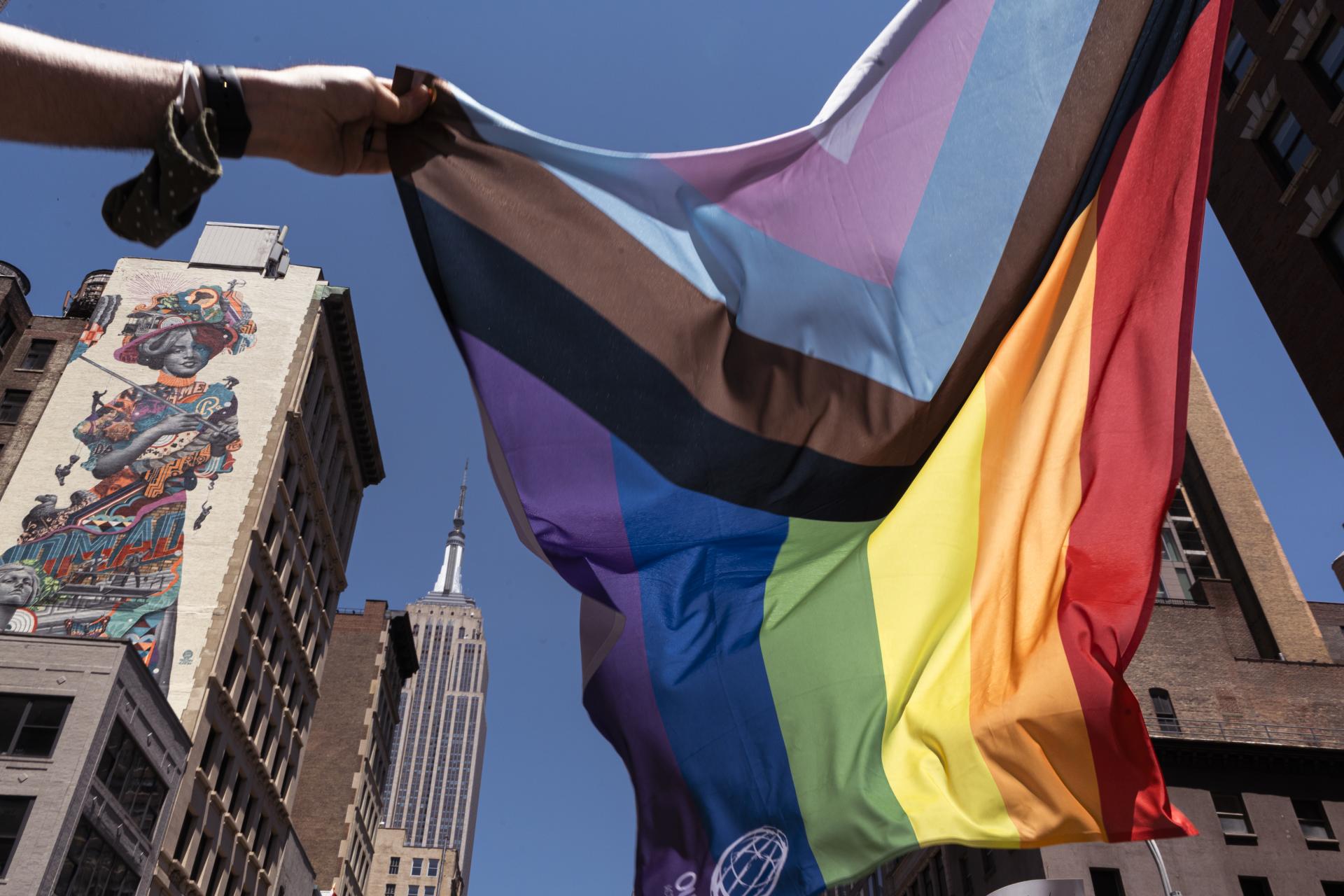
Human Rights Research
Since 1990, we have partnered with activists from all over the world to produce hundreds of groundbreaking reports.
Read Our Reports