

Insights
Together, Forward: We’re Not Done Yet
Region(s)
TOPIC(s)
Type
Commentary
Author(s)
Publish Date
December 2, 2025
Share
Progress made headlines in 2025. Thailand legalized marriage for same-sex couples in January, and Liechtenstein followed suit at the start of the year. Saint Lucia wiped colonial criminalization from its books in July. Courts in Japan have continued to dismantle old medical barriers to legal gender recognition. Puerto Rico’s Supreme Court recognized an X gender marker on birth certificates. Veracruz and Guerrero joined most Mexican states in adopting simple, administrative procedures for changing documents. South Korea’s census allowed same-sex couples to be counted as spouses or cohabiting partners for the first time.
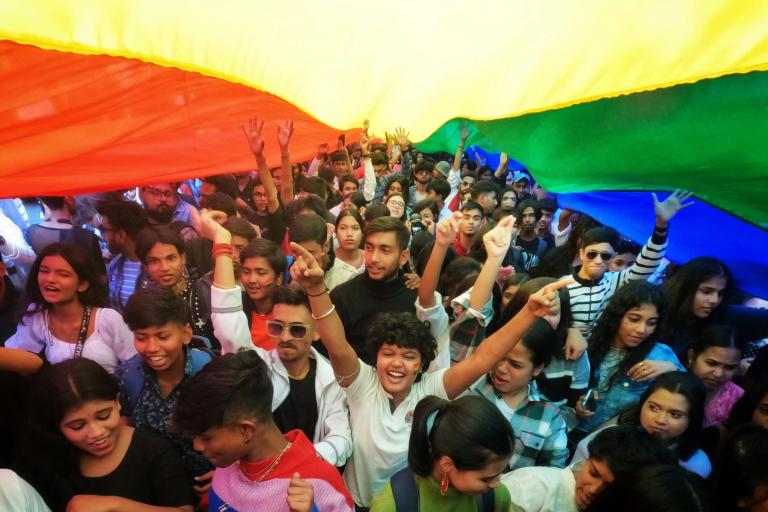
The UN Human Rights Council renewed its mandate on sexual orientation and gender identity - SOGI - protecting the UN’s independent expert role that monitors violence and discrimination against LGBTIQ people worldwide. The Council of Europe adopted the first continent-wide standard on intersex people’s rights. Even Pride crowds told a story, like the historical protest at Budapest Pride. Seoul’s Queer Culture Festival drew a record number of participants, with public health officials and representatives from civil society in attendance.
These changes shape everyday life: families being recognized, IDs finally matching who people are, and young people seeing a future for themselves. The wins did not arrive by magic. They came from patient organizing, careful litigation, steady coalition work, and a refusal to accept invisibility. They matter because they prove what many already know. Change is possible, even in places where it once seemed out of reach.
The same year also brought an organized backlash that was larger than any single country. Burkina Faso and Mali criminalized consensual same-sex relations. Trinidad and Tobago’s courts reversed a decriminalization ruling. Hungary wrote a rigid definition of sex into its constitution and elevated so-called child protection above most rights. Georgia rewrote the equality law to erase gender identity. The UK Supreme Court narrowed how the Equality Act protects trans women. In the United States, federal orders and a Supreme Court ruling helped green-light bans on care for trans youth while many states pushed new restrictions into schools, health systems, and public life. Brazil’s medical council tried to shut down proven care for adolescents, and Argentina blocked gender-affirming care for minors. Peru enacted a nationwide bathroom law keyed to “biological sex.” Russia intensified prosecutions after labeling the “International LGBT Movement” extremist. Vietnam and Senegal canceled events that had previously gone ahead. In Uganda, the World Bank resumed lending despite a law that includes the death penalty. Across too many contexts, people who are trans, nonbinary, or intersex were pushed out of law and out of sight.
These laws don’t stay on the page — they affect people’s safety, livelihoods, health care, and families.
That is the split screen of 2025. Real gains on one side. A coordinated attempt to roll rights back on the other.
What is actually happening
The patterns repeat across regions, though the details change with local politics.
- Governments and courts move to lock sex into a fixed binary and delete the word gender from statutes and policies.
- Barriers grow around health care that trans people rely on, from age limits and criminal penalties to new layers of gatekeeping.
- Legal recognition is pushed back behind courtrooms and medical boards. Rules about family, decency, and propaganda are used to control what can be taught, published, and said in public.
- Criminal law is being expanded to punish identity or allyship and to deter people from advocating for change.
- Intersex people are erased in many of these texts, while the same measures leave room for non-consensual surgeries on intersex children.
That contradiction says the quiet part out loud. The goal is control over bodies and lives, not protection.
Numbers tell part of the story. Sixty-five countries still criminalize consensual same-sex intimacy. Thirty-eight recognize marriage equality. At least twenty-seven US states now restrict some form of gender-affirming care for minors. Brazil again led the world in murders of trans people. Colombia recorded dozens of LGBTQ homicides in the first months of the year. These figures are not abstract. They map onto empty chairs at dinner tables, clinics closed without warning, and IDs that no longer match the person holding them.
There is also a funding story. Cuts to foreign assistance from several governments rippled through the ecosystem that keeps grassroots groups alive. Partners in Eastern Europe, Central Asia, the Western Balkans, and Turkey reported staff losses, program freezes, and hard choices between urgent relief and long-term advocacy. The need grew while the floor under organizations dropped. When funding disappears, it’s not abstract — it means hotlines go dark, shelters close, and legal support dries up. That is exactly how backlash wins. It tries to exhaust movements between emergencies.
Why the bright spots matter
The advances in 2025 were not lucky breaks. Thailand’s law followed years of coalition-building. Saint Lucia’s decision came in a Caribbean wave that relied on smart litigation and regional precedent. Japanese courts built on earlier rulings and a growing consensus that forced sterilization and surgical requirements violate fundamental rights. Puerto Rico’s recognition of nonbinary people on birth certificates, Mexico’s state-by-state administrative reforms, and South Korea’s census shift all stemmed from activists who translated their lived experiences into policy language that decision-makers could not ignore.
The UN Independent Expert on SOGI was saved because 1,200 groups in 157 places moved together. Europe’s new standard on intersex people's rights landed because intersex advocates insisted on naming the harm and offered workable steps to end medical interventions without consent. None of this would have happened without documentation, legal strategy, and relationships that survive changes in government.
How we are responding with partners
Outright works alongside organizations and activists in the countries and communities most affected by these attacks. Partners decide what they need, and we support their priorities. The model is cooperative. We move flexible funds tactically, enabling communities to meet immediate needs and stay organized. We co-develop research, policy briefs, and tools that translate reality into the language of courts, parliaments, and United Nations bodies. We work to shift access so leaders can engage directly with institutions like the UN instead of relying on others to speak for them. We maintain dedicated spaces for trans, intersex, and Lesbian, Bisexual, and Queer (LBQ) organizing that are co-designed with advisors and anchored in local capacity, rather than relying on fly-in advocacy.
This mix helps victories hold. It keeps people safer in crisis. It turns local data into citations a judge will use. It links a shelter or clinic to a policy table where budgets are decided. It builds the muscle memory movements needed when a country swings from reform to repression and back again.
What 2025 asks of all of us
Backlash grows when people feel isolated, overwhelmed, or unsure where to begin. But what helps most is steady, everyday engagement. When support is reliable, communities can plan, stay safe, and keep organizing between emergencies.
There are simple, concrete ways people everywhere can help: share verified information, stay informed about what’s happening beyond your own country, and—if you’re able—give monthly. Larger donors can make the biggest difference by offering multi-year, flexible support. If you work in government or other institutions, strengthen protections and ask who is missing from the table. If you report on these issues, use the language communities use for themselves and ask who is missing from the table.
Above all, we need to name what’s happening without letting fear take over. Change—forward and backward—is happening across all regions. People continue to build safety, community, and belonging, often quietly and against the odds. Remembering this keeps us focused on possibility, not just threat.
We also need to keep naming the trend without letting it define us. Africa is not a monolith of criminalization. The Caribbean is not standing still. Asia is not moving in one direction. In every region, there are people who refuse erasure and who keep building new forms of safety, law, and belonging. Holding both truths is part of the work.
The road ahead
The coming years will test whether the international community can reverse the current slide or whether hard-won gains keep eroding. What we already know is enough to act. Criminalization is increasing in some regions, yet courts and parliaments keep opening doors elsewhere. Health care is under attack in many places, yet professional bodies and judges continue to uphold standards based on evidence and human dignity. Major institutions send mixed signals, yet civil society can still move them when evidence and coalitions are strong.
Outright will continue to do the unglamorous work that movements rely on. We will document, convene, translate, fund, and return to rooms where decisions are made. We will partner with organizations that drive change in their communities and prioritize those who are most affected, erased, and vulnerable. We will continue to show up when nobody is watching.
We are not done yet. We will not be.

Take Action
When you support our research, you support a growing global movement and celebrate LGBTIQ lives everywhere.
Donate Now