
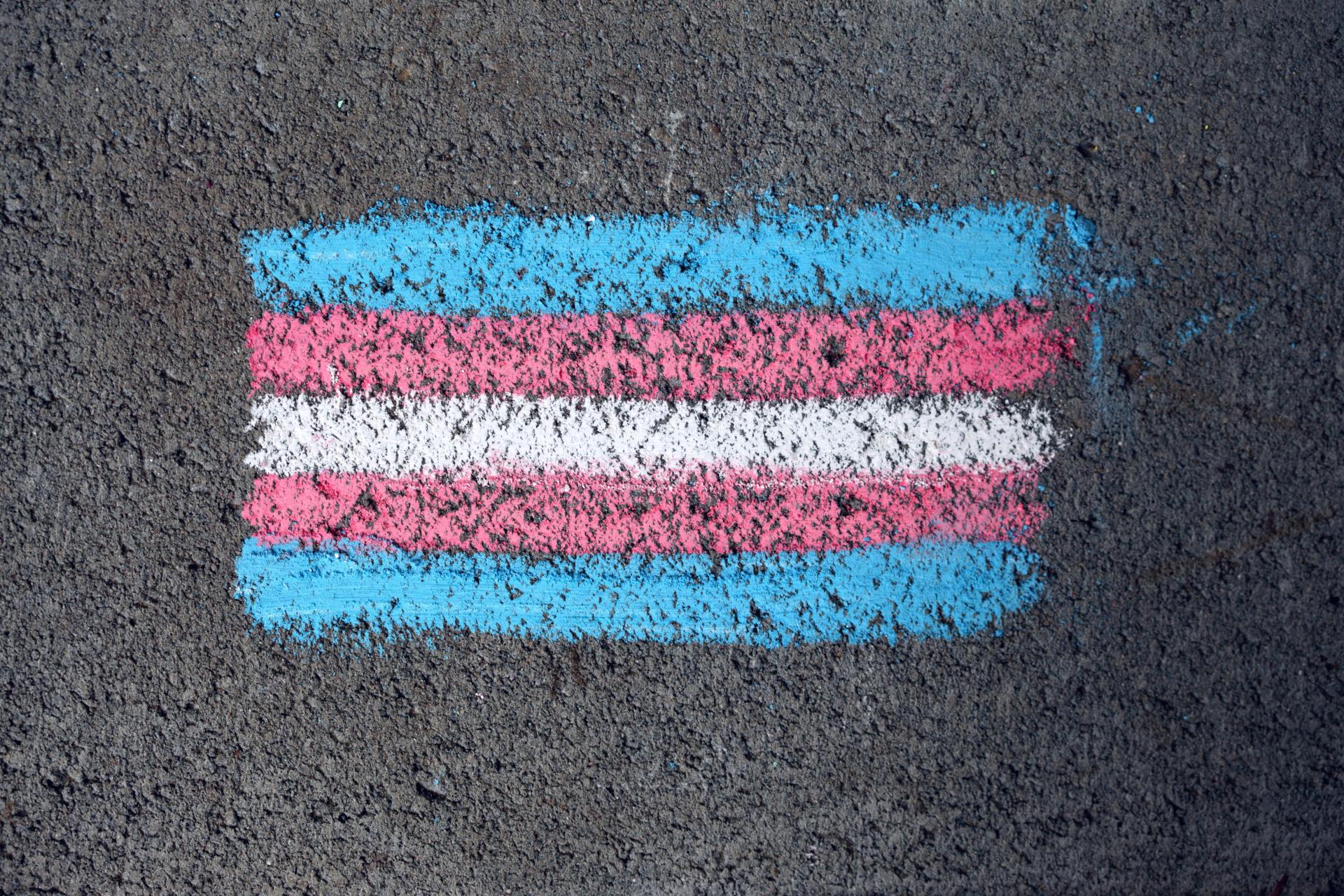
The map below shows countries where diverse gender identities and expressions are criminalized. While only one country explicitly criminalizes “transgender practices” (Niger, 2026), others criminalize trans and gender-diverse identities through laws against “posing” or “dressing” as a different gender, penalties for receiving gender-affirming healthcare, bans on the “promotion” of gender diversity, or laws that dictate what a particular sex must wear. These countries are: Brunei, Iraq, Iran, Jordan, Lebanon, Malaysia, Niger, Nigeria, Oman, Saudi Arabia, Senegal, South Sudan, Tonga, and the United Arab Emirates.
Outright has also identified a broader category of countries with laws on dress, impersonation, and fraud, as well as penal provisions on morality and public decency, that on face value are not discriminatory, but that in practice have been enforced against trans people in a discriminatory manner. These countries include: Burundi, Indonesia, Kenya, Myanmar, Sri Lanka, Uganda, and Zambia. This list is not necessarily exhaustive; it includes countries for which Outright has identified documented cases in recent years. For more information on the de facto criminalization of trans people, consult reports by ILGA World, Human Dignity Trust, and Human Rights Watch.
Last Updated: November 2026
By the Numbers
11
countries
criminalize “posing” or “dressing” as a gender different from one’s assigned sex at birth, mandate clothing items based on sex, or use criminal law to enforce uncodified Shariah dress code principles
3
countries
penalize gender transition or receiving gender-affirming healthcare
2
countries
criminalize the “promotion” of gender diversity
1
UN member state
explicitly prohibits “transgender practices”
Brunei
Criminalizing Laws and Penalties
- Syariah Penal Code Order 2013
- “Any man who dresses and poses as a woman or any woman who dresses and poses as a man in any public place without reasonable excuse”: fine not exceeding 1,000 Brunei Dollar [US$775], imprisonment for a term not exceeding 3 months or both (Section 198)
- “Any man who dresses and poses as a woman or any woman who dresses and poses as a man in any public place for immoral purposes”: fine not exceeding 4,000 Brunei Dollar [US$3,100], imprisonment for a term not exceeding one year or both (Section 198)
Colonial or Local?
Local. These laws are of local origin. The British colonial-era penal code (1951) does not explicitly prohibit the gender expression of trans people. This law was approved in 2013 and is based on an interpretation of Shariah.
Gendered?
It explicitly criminalizes men and women who "dress" and "pose" as a different gender and is therefore applicable to trans men and trans women.
Georgia
Criminalizing Laws and Penalties
- Law on the Protection of Family Values and Minors, 2024
- Bans “popularizing” a person’s assignment to “neither biological sex” or to “a sex that is different from his/her biological sex” in broadcasting, advertising, education, public assemblies, and information provided to minors. Violations are administrative offenses (Articles 3, 8–10)
- Criminal Code of Georgia, as amended by Law No. 4454 of September 17, 2024
- According to (Article 176¹(1)), Violation of the requirements set by the Law of Georgia on the Protection of Family Values and Minors: “Violation by a person, on whom an administrative sanction has been imposed for committing any of the administrative offences provided for by Article 17210 of the Administrative Offences Code of Georgia, of any act defined by the same article, – shall be punished by a fine, or a deprivation of the right to occupy a post or conduct activities for a term of up to three years, or by imprisonment for a term of up to two years.”
Colonial or Local?
Local. Georgia’s parliament adopted this law in September 2024, more than three decades after Georgia’s independence from the Soviet Union in 1991, although it is influenced by Russia’s law prohibiting “propaganda of sex change.”
Gendered?
It is not explicitly gendered.
Iran
Criminalizing Laws and Penalties
- Islamic Penal Code (1991)
- “Women who appear in public without a proper hijab”: imprisonment of 10 days to two months or a fine of 50,000 to 500,000 Iranian Rial [US$0.04-0.4] (Article 638)
Colonial or Local?
Local. ThIs law is of local origin.
Gendered?
The provision on the hijab could have disproportionate impacts on trans men and gender nonconforming people.
Iraq
Criminalizing Laws and Penalties
Law No. 8 of 1988 on Combating Prostitution, as amended by Law No. 15 of 2024
“anyone who biologically changes their sex or attempts to do so”: imprisonment of one to three years (Article 7.2). The same penalty applies to “any physician or surgeon who performs the procedure.”
Colonial or Local?
Local. The 1918 penal code promulgated by the British does not contain this provision.
Gendered?
It is not explicitly gendered.
Jordan
Criminalizing Laws and Penalties
- Penal Code No. 16 of 1960
- "Any male who is disguised in a female's dress and enters a place reserved for women only or which cannot be entered by other than women at the time of committing the act”: imprisonment of up to six months (Article 307)
Colonial or Local?
Local. While the penal code itself is influenced by the French Penal Code of 1810 and the Lebanese Criminal Law of 1943, this provision was enacted in 1960, years after independence in 1946.
Gendered?
It can be used to target trans women.
Lebanon
Criminalizing Laws and Penalties
- Penal Code (Legislative Decree No. 340, 1943)
- "Any man who disguises himself as a woman and enters a place specifically for women only or a place in which anyone aside from women are prohibited from entering”: imprisonment of up to six months (Article 521)
Colonial or Local?
Local. Lebanese authorities enacted this penal code eight months before the end of the French mandate. A similar provision did not exist in French law at the time of enactment.
Gendered?
It can be used to target trans women.
Criminalizing Laws and Penalties
In Malaysia, all 13 states and the Federal Territories have local Shariah enactments banning “posing” as a gender different from one’s assigned sex. For example:
- Syariah Criminal Offences (Federal Territories) Act 1997
- "Any male person who, in any public place, wears a woman's attire and poses as a woman for immoral purposes”: fine not exceeding 1,000 Malaysian Ringgit [US$245] or to imprisonment of up to one year or to both (Section 28)
- Criminal Offences in the Syarak Enactment 1991 (Perlis)
- "Any man who dresses like a woman (tasyabbuh) in any public place”: fine not exceeding 5,000 Malaysian Ringgit [US$1,225] or imprisonment of up to three years or both (Section 7.1)
- See this 2014 summary by Human Rights Watch for the full list of relevant laws.
While all these jurisdictions ban “male persons” from “dressing” or “posing” as women, only three states prohibit women from doing the same. For example:
- Criminal Offences in the Syarak Enactment 1991 (Perlis)
- "Any woman who dresses like a man (tasyabbuh) in any public place”: fine not exceeding 5,000 Malaysian Ringgit [US$1,225] or imprisonment of up to three years or both (Section 7.2)
- Syariah Criminal Offences Enactment 1995 (Sabah)
- "Any male person who, in any public place, wears a woman's attire and poses as a woman or vice versa”: fine of up to 1,000 Malaysian Ringgit [US$245] and/or imprisonment of up to six months
At least one state criminalizes gender-affirming healthcare:
- Syariah Criminal Code (I) Enactment 2019 (Kelantan)
- “Any person who changes his or her gender, causes change of his or her gender, changes gender of another person, causes change of gender of another person”: imprisonment of up to two years, a fine of up to 3,000 Malaysian Ringgit [US$735]. and any other punishment deemed appropriate by the court (Section 18)
Colonial or Local?
Local. While Section 377 of the federal penal code, which criminalizes consensual same-sex conduct, was inherited from the British, there is no secular penal provision that explicitly criminalizes the gender expression of trans people. However, throughout the country, state Shariah enactments, issued beginning in the 1980s, criminalize gender expression.
Gendered?
Most of these “cross-dressing” laws directly target trans women, while some also target trans men. The law penalizing gender transition is gender-neutral.
Nigeria
Criminalizing Laws and Penalties
Several states have laws restricting gender diversity. For example:
- Penal Code (Northern States) Federal Provisions Act (1959)
- “The term vagabond shall include...any male person who dresses or is attired in the fashion of a woman in a public place”: imprisonment of up to two years or a fine of 450 Nigerian Naira [US$0.33] or both (Section 405.2.e)
- Kano State Prostitution and Other Immoral Acts (Prohibition) Law 2000
- "Any person being a male gender who acts, behaves or dresses in a manner which imitate the behavioural attitude of women”: one year in prison or a fine of 10,000 Nigerian Naira [US$7.30] or both (Article 9)
- According to Human Dignity Trust, the states of Bauchi, Gombe, Jigawa, Kaduna, Katsina, Kebbi, Sokoto, Yobe, and Zamfara also penalize “any female person who dresses or is attired in the fashion of a man in a public place.”
Colonial or Local?
Colonial. The British modeled the 1959 penal code in Northern Nigeria after the 1899 Sudanese penal code, which itself was based on the Indian Penal Code, as the British believed that such laws found acceptance among "populations similar to Northern Nigeria's in their proportions and mixtures of Muslims and non-Muslims." New state laws are based on Shariah.
Gendered?
Most of these laws directly target trans women, while some target trans men.
Niger
Criminalizing Laws and Penalties
- Ordinance No. 2026-09 of February 16, 2026, Establishing the Penal Code
- “Any person who commits or attempts to commit an indecent or unnatural act or engages in Lesbian, Gay, Bisexual, Transgender, Queer, Intersex, and Asexual (LGBTQIA+) practices”: imprisonment between five and ten years and a fine of 10,000,000-100,000,000 West African CFA francs [US$17,477-174,775] (Article 390)
- “Any person who...artificially changes or attempts to change their biological sex”: imprisonment between five and ten years and a fine of 10,000,000-100,000,000 West African CFA francs [US$17,477-174,775] (Article 390)
Colonial or Local?
Local. Niger explicitly criminalized same-sex intimacy, same-sex marriage, gender transitioning, and LGBTIQ organizing in 2026.
Gendered?
It is not explicitly gendered.
Oman
Criminalizing Laws and Penalties
- Penal code (2018)
- “whoever publicly appears in the likeness of women in his dress or guise”: imprisonment between one month and one year and/or a fine of 100 to 300 Omani Rial [US$260-780] (Article 266)
Colonial or Local?
Local. This provision was enacted in 2018 and is based on Shariah.
Gendered?
It can be used to target trans women.
Saudi Arabia
Criminalizing Laws and Penalties
According to Human Dignity Trust, authorities, notably the Committee for the Promotion of Virtue and Prevention of Vice, have used uncodified Shariah principles on dress and behavior to arrest and detain trans people. Human rights organizations have reported arrests of trans women for “imitating women” in 2005, 2009, 2010, and 2017.
Article 192 of an alleged draft penal code—leaked in 2022 and analyzed by Amnesty International in 2024—seeks to explicitly punish “imitat[ing] another sex through his dress and appearance with imprisonment of up to six months and a fine of up to 10,000 Saudi Riyal [US$2,660].”
Colonial or Local?
Local. Saudi Arabian penal law is based on Shariah.
Gendered?
These penal principles are not explicitly gendered, but they have been disproportionately enforced against trans women.
Senegal
Criminalizing Laws and Penalties
Law No. 2026-08 of March 27, 2026, amending Article 319 of the Penal Code (Law No. 65-60 of 1965)
“any public representation, by speech, writing, image, gesture, sound or any other means whatsoever, tending to promote homosexuality, bisexuality, transsexuality, zoophilia, necrophilia or any other similar practice”: imprisonment of three to seven years and a fine of 500,000 to 5,000,000 West African CFA francs [US$874-8,739] (Article 319).
People convicted under Article 319 also lose the civic rights listed in Article 34 of the penal code for 10 years, including the right to vote.
Colonial or Local?
Local. Article 319 of the penal code was adopted in 1965, after independence in 1960. The provisions on the “promotion” of transsexuality were added in 2026.
Gendered?
It is not explicitly gendered.
South Sudan
Criminalizing Laws and Penalties
- Penal code (2008)
- The term “vagabond” means…any male person who dresses or is attired in the fashion of a woman in a public place”: imprisonment of up to three months and/or an unspecified fine (Section 379)
Colonial or Local?
Colonial. This was directly taken from Section 448(2)(e) of the 1925 Sudanese penal code, which the British drafted and modeled after the Indian Penal Code "based on the assumption that the social structure and habits of India [were] closer to Sudan than that of England."
Source: Alan Gledhill, The Penal Codes of Northern Nigeria and Sudan (Sweet & Maxwell, 1963), 749.
Gendered?
It can be used to target trans women.
Tonga
Criminalizing Laws and Penalties
- Criminal Offences Act (as amended by Act 19 of 1978)
- “Any male person who, whilst soliciting for an immoral purpose, in a public place with intent to deceive any other person as to his true sex, has on or about his person any article intended by him to represent that he is a female or in any other way impersonates or represents himself to be a female”: imprisonment of up to one year and/or a fine not exceeding 1,000 Tongan Pa'anga [US$407] (Section 81.5)
Colonial or Local?
Local. While Tonga’s provision on sodomy was inherited from the British protectorate era, this section was introduced in 1978, after Tonga gained independence in 1970.
Gendered?
It can be used to target trans women.
United Arab Emirates
Criminalizing Laws and Penalties
- Federal Crimes and Penalties Act 2021
- “Any man who…disguises himself as a woman to enter a women-only space or a place only accessed by women at the time”: imprisonment of up to one year and/or a fine of 10,000 United Arab Emirates Dirham [US$2,730] (Article 412)
Colonial or Local?
Local. This law is of local origin.
Gendered?
It can be used to target trans women.