

Insights
The right to earn a living
Region(s)
TOPIC(s)
Type
Commentary
Author(s)
Publish Date
November 12, 2026
Share
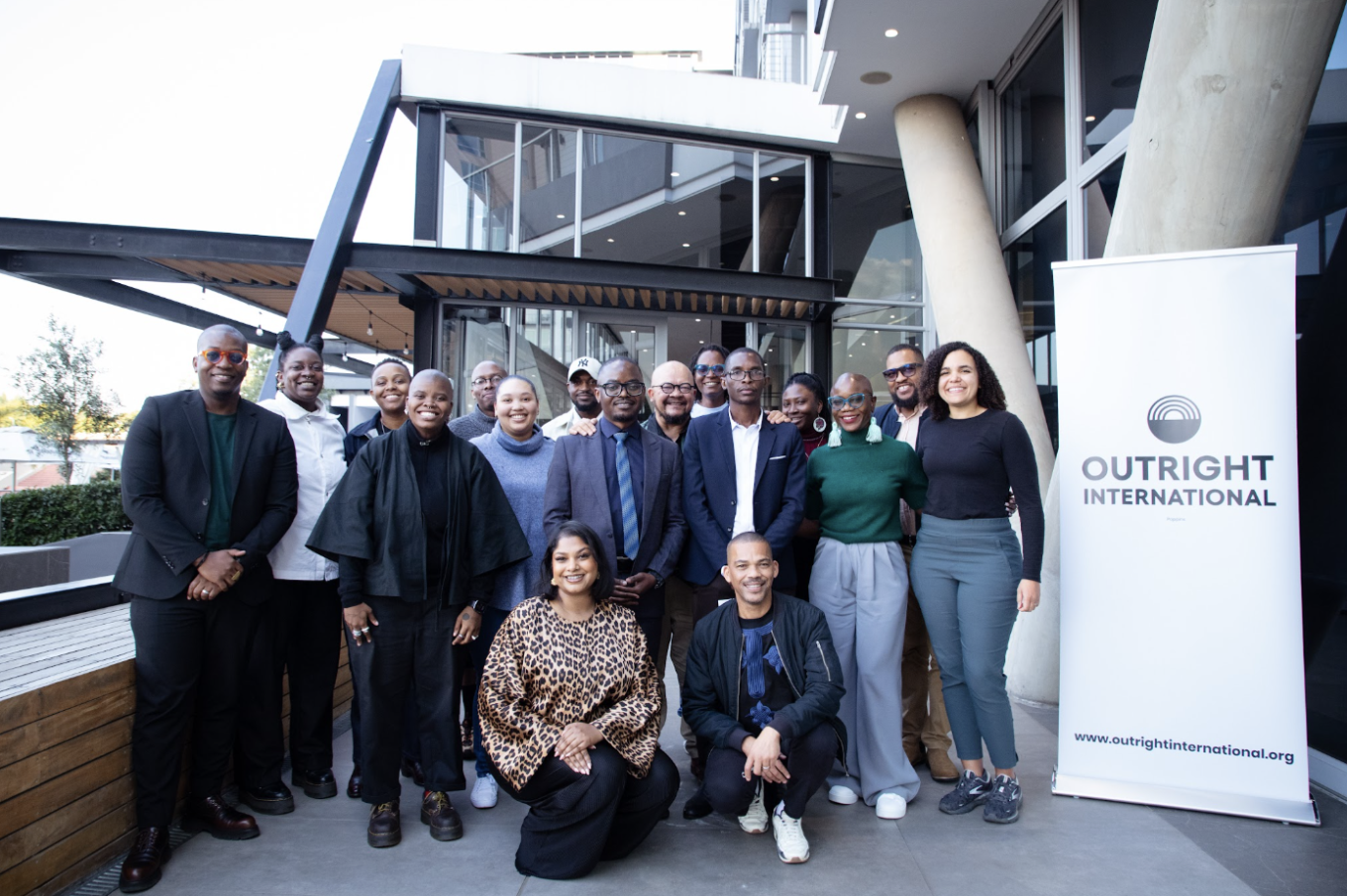
Caption: Partners at the Build, Earn, Thrive (Bet) convening of LGBTIQ entrepreneurs and activists from Southern Africa in Johannesburg, South Africa, June 2026. Photo: Outright International
Last week, voters in the United States went to the polls in the midterm elections and changed the majority in both houses of Congress. Exit polls put the cost of everyday life at the center: 89% of voters said it was a major factor in their decision. When I talk to LGBTIQ activists from around the world, I increasingly hear this as well. LGBTIQ people need rights - and access to decent livelihoods.
At Outsummit Asia this week, one panelist (anonymous for safety reasons) said, "Economic well-being is not simply about finding a job." It is about dignity, financial independence, equal opportunity, and the ability to sustain a quality life. In practical terms, this means a job. A bank account in their own name. A landlord who will rent to them. The means to leave a family home or a violent partner. Outright will keep working to ensure those rights are recognized in law and upheld in court. But a right is hard to exercise when you cannot pay for a lawyer, the bus fare to a court or clinic, or the rent on a safe place to live. This piece is about the right to earn a living: why the past year made it urgent, what partners have learned about helping people earn, and what a livelihood makes possible beyond the paycheck.
What the elections change, and what they do not
In the United States, the new Congress takes office in January. A change in majority does not by itself restore the foreign assistance dismantled in 2025, and I do not expect that funding to return in its former form. Breaking Point, the report we published in September, found that 89% of the LGBTIQ organizations we surveyed had lost funding since January 2025, and more than one in three said they are likely to have to close within a year. That damage is done, and its effects will last for years.
The U.S. government cannot undo that damage by switching its funding back on, and it was not the only funder that cut: other governments reduced their aid budgets over the same period. Rebuilding what was lost means rebuilding the organizations that closed or shrank, the services they ran, from legal aid and documentation to shelters and mental health support.This piece is about one part of it, the part partners in every region raised in the survey behind Breaking Point and in our partner meetings this year when we asked what would help them stand on their own: the ability of LGBTIQ people to earn.
The United States was not the only country to hold elections. Brazil and Serbia did too, and the three results point in the same direction. Two weeks before the midterms, voters in Brazil returned Luiz Inácio Lula da Silva to the presidency in a close runoff against Flávio Bolsonaro, whose political movement has spent a decade attacking LGBTIQ people. In Serbia, record turnout ended Aleksandar Vučić’s more than a decade in power and gave a parliamentary majority to a list that grew out of student protests against corruption, with an independent judiciary and free media at the top of its program. In each country, voters chose the side that campaigned on accountability and rights over the side that did not, and that opens space: for human rights protections to be debated and strengthened, for LGBTIQ activists to be heard by people in power, and in Brazil and the United States, for movements to recover ground lost under governments that worked against them. Space is where the work starts, and a movement can only use it if its people can afford to show up. As we invest in LGBTIQ movements going forward, this is a focus area that we need to pay more attention to.
What partners taught us when we met in Bangkok
In April, some of the grantee partner organizations in Build, Earn, Thrive (Bet), Outright’s program on economic inclusion, met in Bangkok. Bet is broader than those grants: it also includes the fund we run with LesbianGlobal for projects led by lesbian, bisexual, and queer women, as well as our advocacy with the development banks, both of which are covered later in this piece. Two themes run through all of it, and the difference between them matters.
An inclusive economy is the destination: an economic system in which everyone, whatever their identity or background, can take part in economic life, contribute to it, and benefit from it. Economic inclusion is the work of getting there: the access to finance, education, and legal status that lets a person hold a job, start a business, and become financially independent. Bet works on both, and its name says how. LGBTIQ people build the skills to seek and secure decent work. They earn because employers value and recruit them. They thrive because hiring and working conditions are free of discrimination.
In 2024 and 2025, Outright awarded more than 60 grants for livelihoods and economic inclusion work in more than 30 countries. In Bangkok, the people running those projects taught us two lessons that now shape which projects we fund and how we support them.
The first lesson: safety and a livelihood depend on each other, and partners know which their community needs first. It is hard to learn bookkeeping while you are working out where to sleep tonight, so Casa Frida, a partner in Mexico that works with LGBTIQ refugees, migrants, and people displaced within the country, secures shelter and psychosocial support first. Then it asks each person to write down a “life project,” the direction they want their life to take. Only then does the work turn to résumés and interviews. Casa Frida has worked this way with more than 7,700 LGBTIQ refugees, migrants, and displaced people since 2020. This year it signed up 45 companies to its Contrata LGBT+ program, in which employers commit to fair hiring and open their vacancies to people who have come through the program, and more than 100 displaced LGBTIQ people have started formal jobs as a result. Their stories differ in the details and follow a pattern. One woman arrived in Tapachula, on Mexico’s southern border, as a trans migrant without legal status. She completed the personal finance modules, the résumé workshop, and the interview practice, joined a relocation program, and started her first formal job in Mexico City. She also opened a bank account in her own name, the first she had ever had, and told Casa Frida’s team she can now cover her own rent and food. Other partners start from the opposite end. For a woman who cannot leave a forced marriage because she has no income of her own, a situation the lesbian, bisexual, and queer women’s projects described later in this piece were built around, the paycheck is the route to safety.
The second lesson: meet institutions where they are, and speak to the work they actually do. In some companies and government ministries, the words “diversity, equity, and inclusion,” and even “inclusion” on its own, now provoke a reaction before the rest of the sentence is heard. Cámara de la Diversidad, an LGBTIQ chamber of commerce in Colombia, stopped pitching to human resources departments and started talking to procurement teams in procurement’s own terms: supplier diversity, return on investment. Eight-minute courtesy meetings became hour-long strategy sessions. Over the past two years, more than 50 LGBTIQ-owned businesses in the chamber’s network have secured their first corporate purchase orders, totaling US$65,000. What the chamber wants for those businesses has not changed. What changed is how it sees the person across the table: a procurement officer is judged on suppliers and savings, and an LGBTIQ-owned business is a supplier with something to sell. That is a meaningful shift, and it is why the door opened.
The chamber works on the other side of the hiring table too. In May it ran a job fair in Suba, a district of Bogotá where many Venezuelan migrants live, aimed at lesbian, bisexual, trans, and queer migrant women who had arrived with degrees, trades, and business ideas that counted for nothing without papers. It was planned for 200 people. More than 400 came. Thirty-one companies and 12 public institutions set up tables so a woman could register for a national ID number and hand in her résumé in the same afternoon; sign language interpreters stood by, and the mayor stopped in. Thirty-two people were hired that day. Twenty of the women went on to a 12-session mentorship; none missed a session, and each received a free stand at a Bogotá trade fair in July, several standing behind their own names and products for the first time.
Our team has written up both lessons, in the partners’ own words, in Field Notes: Building Inclusive Economies.
What a livelihood makes possible
Earning is only part of what these projects change. They also change whether a person can prove who they are to the state, reach social protection, and live more openly in their community. In Pakistan, our partner SUPPORT Foundation persuaded the national registration authority to relax its documentation requirements for trans applicants, and 175 trans people obtained the national identity card that a bank account, a job application, and social protection all depend on. The same project helped them open bank accounts and enroll in the national cash support program. Nine have since started home-based businesses, and two others have taken jobs as receptionists. SUPPORT Foundation also reports that, over the life of the project, the Government of Sindh decided to introduce a job quota for trans people across its departments, a change it counts among the project’s results.
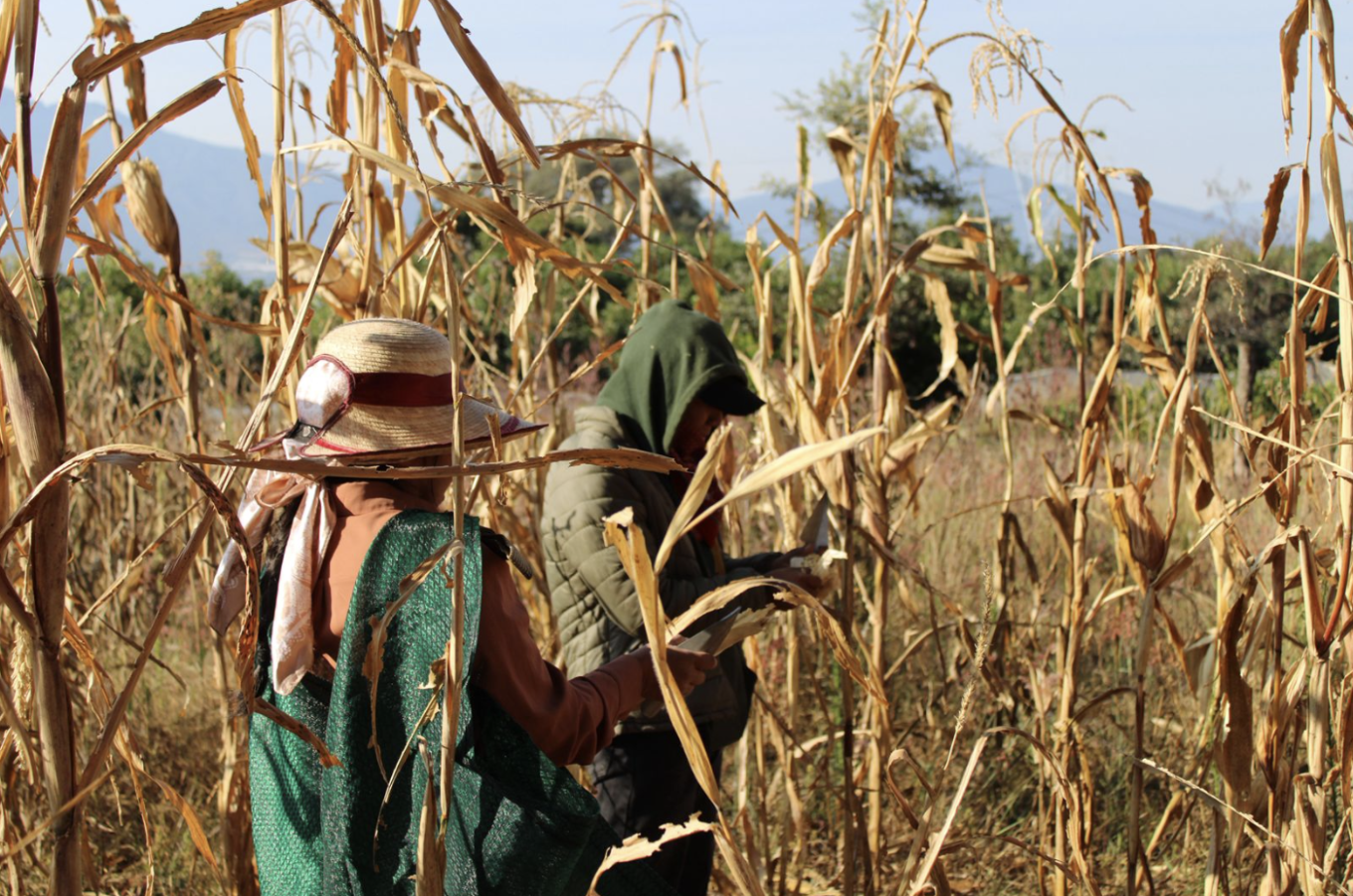
Caption: Participants in the Nana Echeri Collective’s traveling school for Indigenous and rural lesbian, bisexual, and queer women harvest maize in the P’urhépecha region of Michoacán, Mexico. Supported by LesbianGlobal’s Economic Empowerment Fund, established with Outright International as intermediary. Photo: Nana Echeri Collective
In Ghana, where intersex people face family rejection, stigma, and unemployment as a matter of course, the Intersex Persons Society of Ghana mapped 22 businesses in its area willing to take on intersex apprentices and employees. One participant completed an apprenticeship in car mechanics and spray painting. Another had been running an event ushering service informally, with no records and no fixed prices. After the group’s bookkeeping and pricing workshops, she reorganized it into a registered agency and planned to hire from her own community. The first change the group reported had nothing to do with money: members who had hidden who they were for years said they were less afraid to say so where they felt safe.
In Nigeria, six people trained as tailors, hairstylists, shoemakers, and nail artists in states where stigma runs deep. All six reported higher incomes. One of them told us: “People who used to mock me now come to braid their hair with me.” This is what partners mean when they say economic inclusion changes how a person is seen in their community, and how they see themselves.
The demand is far greater than the funding
When Outright and LesbianGlobal opened a fund this year for projects led by lesbian, bisexual, and queer (LBQ) women, 70 organizations in 39 countries applied. We could fund 13. Those 13 projects started in April and will continue until May 2027. In the P’urhépecha region of Michoacán, Mexico, the Nana Echeri Collective is running a traveling school that teaches Indigenous and rural LBQ women trades usually closed to women, alongside agroecology and eco-construction, with women teaching women. In Mombasa, Kenya, Coast Women for Women is helping LBQ parents turn the unpaid care work they already do into paid work in childcare, home care, and catering, organized through a parenting cooperative that sets prices and shares clients. In Benguela, Angola, Arquivo de Identidade Angolano is training 70 rural and peri-urban women in cutting, sewing, and textile production, with built-in financial management and marketing. In Rivers State, Nigeria, the Women in Innovation and Tech Initiative started from a hard fact its own research surfaced: many LBQ women stay in forced marriages because they have no income of their own, so the project treats a trade and a first paycheck as protection. And in a country we do not name for the partners’ safety, a cohort of 30 women who sell food, clothes, and beauty services in the informal economy is learning pricing, bookkeeping, and digital selling, backed by a revolving loan fund in which each repayment pays for the next woman’s loan. The 57 projects we could not fund, and the people they would have reached, are the gap I want to close.
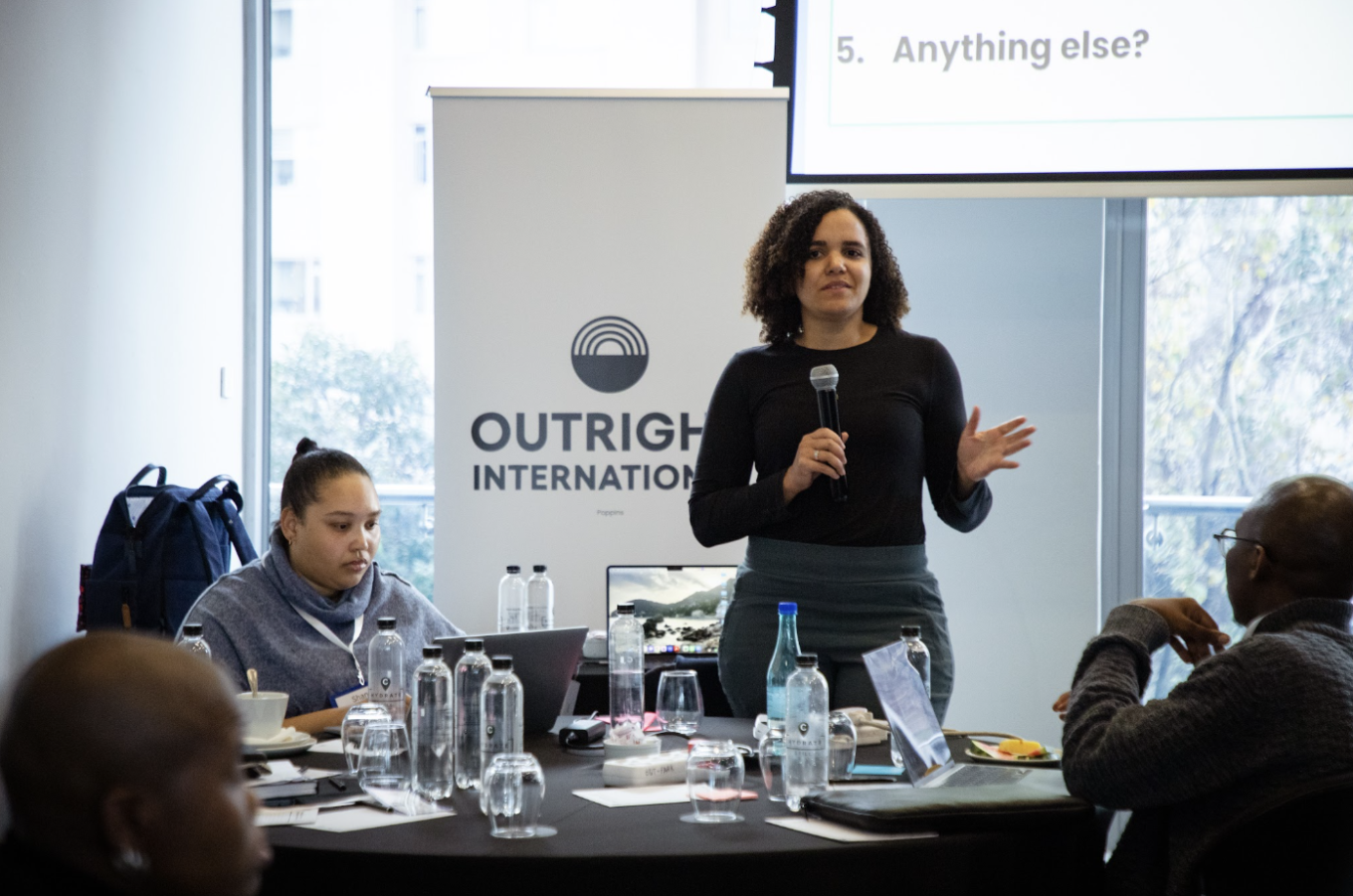
Caption: Karissa Jackson (she/her), who leads Build, Earn, Thrive (Bet) at Outright, speaks with partners at the Bet convening in Johannesburg, South Africa, June 2026. Photo: Outright International
We are not making this case alone. Open for Business, a coalition of global companies, ranked 149 cities in 2025 for economic competitiveness and the inclusion of LGBTIQ people, and found that the cities most open to LGBTIQ people also tend to score highest on economic competitiveness. Their data show the two moving together; they do not claim one causes the other, and neither do I. Koppa Lab brought more than a dozen stock exchanges together to ring the opening bell for LGBTIQ equality, and my colleague Karissa Jackson (she/her), who leads Bet, spoke at its conference last month. Outright carries the same argument into the World Bank and the Asian Development Bank, which lend about US$200 billion a year to the governments of countries where an estimated 500 million LGBTIQ people live, and where we press for LGBTIQ people to be included in the programs those loans pay for.
Where the conversation continued this month
At Outsummit in New York on November 6, one session focused on how LGBTIQ movements can claim a place in the framework that will replace the UN Sustainable Development Goals after 2030, before it is written. Five days later, Outsummit Asia opened with activists from Vietnam and Bangladesh in conversation with Open for Business about economic inclusion and how companies in the region can advance it. Recordings of both go to everyone who registered and can be found at the links above.
After a year in which nine in ten of the LGBTIQ organizations we surveyed lost funding, every part of this movement needs rebuilding, and the litigation, documentation, shelters, and counseling that the cuts took away need funders to return to them. Livelihoods belong on that list, because they uplift everything else: an LGBTIQ person with an income is less exposed to any funder’s next decision, and so is a movement made of such people. A person with an income can pay a lawyer, leave an unsafe home, and plan past next month. If you want to be part of this, [a gift to Outright of any size] reaches the partners doing this work. The hairstylist in Nigeria whose neighbors once mocked her now has them sitting in her chair. Her income is earned with dignity and in the open, and that is what an inclusive economy looks like from the inside. It is the future we claim, and we are building it with you.
Thank you for being part of this. The work doesn’t stop.
Take Action
When you support our research, you support a growing global movement and celebrate LGBTIQ lives everywhere.
Donate Now