blog page block - Blog Page Block
18th Annual International AIDS Conference
July 22, 2010| Contributed by Darrin Adams, Researcher and Activist
The 18th Annual International AIDS Conference is being held in Vienna from the 18th - 23rd July 2010 under the theme "Rights Here, Right Now" - a theme that resonates with IGLHRC's overarching work to ensure "human rights for everyone, everywhere. "IGLHRC is participating in the AIDS conference as part of efforts to ensure that the needs and interests of LGBT communities and individuals are included in AIDS policies and programming. In addition to IGLHRC's Executive Director Cary Alan Johnson, Fernando D'Elio (Program Associate with Latin America and the Caribbean) and Chivuli Ukwimi (Health and Human Rights Program Officer in IGLHRC's Africa office) will be in attendance along with IGLHRC conference blogger Darrin Adams.
IGLHRC also facilitated the participation of three African LGBT activists and one activist from Haiti to participate in the week's events and sponsored a panel on health and human-rights responses to AIDS during the pre-conference meeting focused on the issues relating to men who have sex with men. This year's conference is an important moment for advocacy, coming as it does alongside an intensified push for expanded HIV treatment in order to meet the 2010 target year set by governments for the achievement of universal access to HIV service.
Reflections from Vienna 2010
July 22, 2010| Contributed by Darrin Adams, Researcher and Activist
As the Conference wound down, my nostalgia started kicking in almost immediately. I had met so many wonderful people; was able to share the work I was involved in with the world; and had met the leaders in the field of MSM and sexual-minorities HIV prevention, research and advocacy.
Points to Remember from Vienna 2010
There were some great sessions led by leaders in the field and names to watch out for in the future - Stefan Baral seems to be the researcher to watch. There was so much information presented that it seems impossible to provide a synopsis here. But one presenter at the MSMGF pre-conference clairvoyantly summarized the International AIDS conference before it even started.
LGBT BBQ
July 22, 2010| Contributed by Darrin Adams, Researcher and Activist
As I walked into the Vienna AIDS 2010 LGBT BBQ, sponsored by COC Netherlands and Schorer, I was struck by how many people from the conference were all in one place who also happened to be lesbian, gay, bisexual and/or transgender. The diversity that is the International AIDS Conference was represented there - queer people with a diversity of nationalities, accents, languages and dress.
My friend and former colleague, with whom I worked in forming an LGBTI support group and MSM/WSW research in Lesotho, was there and one of the first things she said to me was, “There are so many gay people here, all in one place. It reminds me of your going away party when you left Lesotho.”
She was referring to a party I threw and to which I invited every LGBT person I knew as well as their friends and friends of friends. I not only wanted people to remember me, but I also wanted to give back to the community that had accepted me and included me with such open, welcoming arms. At my event in Lesotho, people could be who they are, with no toning down and nothing hidden.
How You Say: Public Health or Human Rights?
July 19, 2010| Contributed by Darrin Adams, Researcher and Activist
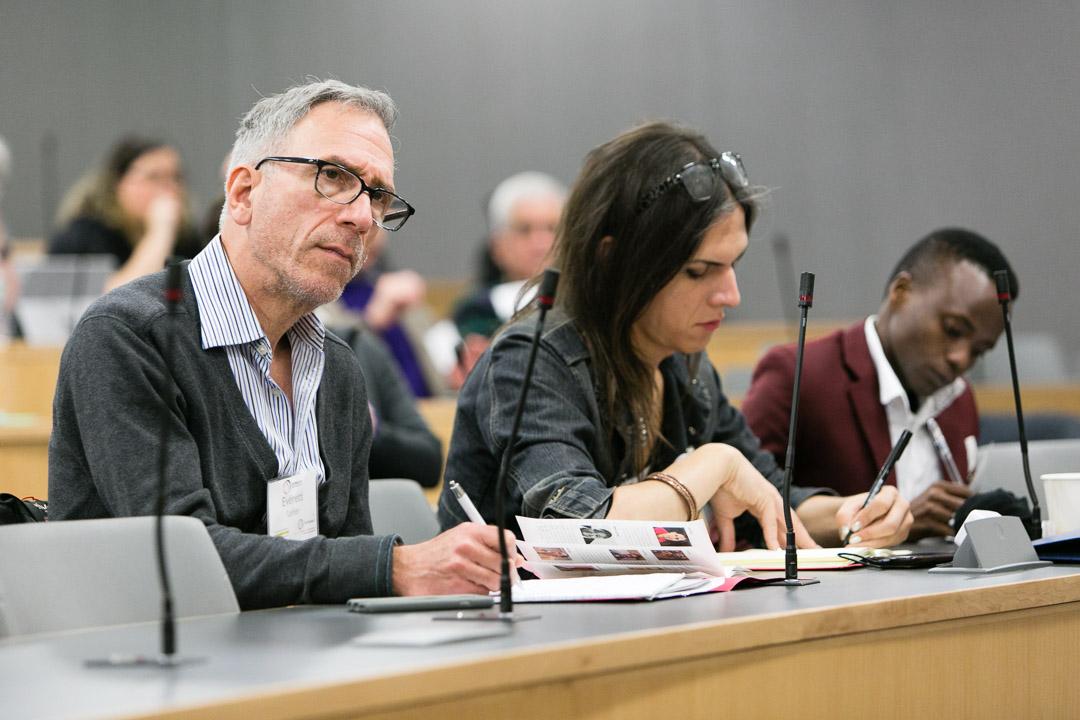
In the IGLHRC morning session at the Be Heard! MSMGF pre-conference, Chivuli Ukwimi, Program Associate, moderated a panel with advocates Nikki Mawanda, Executive Director of Transgender Intersex and Transsexuals in Uganda, Dunker Kamba, Centre for the Development of People in Malawi. The session was titled “Understanding and Deploying the Right to Health: A Tool for Achieving LGBT Human Rights”.
Nikki and Danker gave overviews of the situations that had been happening in their respective countries. The information they gave was what had been covered in the media and other outlets, so I won’t go over it all here.
Initially the session was supposed to involve group work and brainstorming to develop practical strategies to take back into our communities and organizations. That didn’t happen. The group work was set aside in favor of an open discussion on public health and human rights strategies. There were lively debates from the participants on the relative benefits of using the public health argument versus the human rights argument for including MSM in HIV AIDS policy and programming. Some say that using the term “vulnerable populations” weakens the LGBTI community and takes emphasis away from fundamental human rights that should be enjoyed by all people.
Be Heard! MSMGF Pre-Conference Reflections
July 19, 2010| Contributed by Darrin Adams, Researcher and Activist
What you are doing is a gesture to transform the world," said Michel Sidibé, UNAIDS Executive Director, in his opening remarks for the Be Heard! MSM Global Forum pre-conference on July 17. Sidibe set the tone for this one-day event for over 300 MSM, LGBTI and allied advocates, leaders and participants. Morning and afternoon sessions focused on the theory and practice in MSM and LGBTI HIV prevention, care and support. More detailed information can be found on the MSMGF web site here.
Again and again, "Be Heard!" was emphatically pronounced with such force, calling us to stand up and, well, be heard. But what does it look like to "be heard"? For me, it is not limited to marching and rallying with posters and chants nor is the phrase exclusive to activists who are loudly expressive in their call for equal rights. Being heard can be found in those still, small moments like coming out to that first person or bringing a friend to a local support group meeting for LGBT people.
LGBT Senegalese Speak Out
June 8, 2010| Contributed by IGLHRC
In Senegal, same-sex activity has, since 1965, been punishable by up to five years imprisonment. Enforcement of this law has escalated in the past two years, with the arrests of more than 50 people and trials of at least 16 individuals suspected of same-sex activity or being part of the Lesbian Gay Bisexual Trans community. Simultaneously, state-sanctioned violence and anti-gay rhetoric in the media against individuals believed to be LGBT has increased. Our recent collaboration with None on Record: Stories of Queer Africa resulted in four audio profiles of LGBT Senegalese, who recount their experiences with hostility and homophobia in the country.
Recognition of an Organization and the Loss of a Leader
May 3, 2010| Contributed by IGLHRC
The Black Pink Triangle Izmir LGBTT Association represents the LGBTT community in Izmir, the third biggest city in the republic of Turkey. Soon after its establishment in the fall 2009, the newly formed group was sued by the local government on the ground that the organization violated the Turkish morality law by defending the rights of queer poeple. This is despite the fact that the Turkish law does not ban homosexuality, and other LGBTT groups like Kaos GL and Lambda Istanbul are legally registered and operate in that country.
In November 2009, IGLHRC wrote a letter to the Turkish Government requesting that officials expedite the registration of Siyah Pembe Üçgen LGBTT Derneği (Black Pink Triangle LGBTT Association) and clarify that LGBTT people enjoy the full rights of citizens provided by the Turkish Constitution.
Strategies Against Religious Fundamentalism: LAC Institute 2010
April 29, 2010| Contributed by IGLHRC
The IGLHRC Institute is a two-week training for LGBTI activists from Latin America and the Caribbean. Twenty-two activists representing the entire region are meeting in Lima, Peru for the 2010 institute that will focus on the topic of “Strategies Against Religious Fundamentalism." The first Institute was held in Argentina in 2005, and gathered transgender and intersex activists from the region. The second was in Costa Rica in 2007 for lesbians and bisexuals from Central America and Caribbean. The third, in Brazil in 2008, was entitled, “Strategies Against Religious Fundamentalism." This year’s Institute is the second on this topic.
Estrategias Frente a los Fundamentalismos Religiosos: 29 de abril – Evaluación, estrategias y cierre
April 29, 2010| Contributed by
El último día se realizó con la coordinadora, Rosa Posa Guinea, una evaluación exhaustiva de cada uno de los diferentes talleres y charlas, analizando la pertinencia de los contenidos, la metodología y su sentido dentro de la idea general del instituto. A la tarde, se trabajó en grupos la generación de estrategias tanto locales como internacionales frente a los fundamentalismos religiosos detallando los objetivos, contenidos, alianzas y posibles reacciones adversas.
Estratégias Contra os Fundamentalismos Religiosos: 29 de abril – Avaliação, estratégias e encerramento
April 29, 2010| Contributed by IGLHRC
No último dia trabalhamos com a coordenadora, Rosa Posa guinea, uma avaliação exaustiva de cada um dos diferentes seminários e palestras, analisando a pertinência dos conteúdos, a metodologia e seu sentido na ideia geral do Instituto.
À tarde, divididxs em grupos, trabalhou-se a elaboração de estratégias tanto locais como internacionais frente aos fundamentalismos religiosos, detalhando os objetivos, conteúdos, alianças e possíveis reações adversas.
Estrategias Frente a los Fundamentalismos Religiosos: 28 de abril
April 28, 2010| Contributed by IGLHRC
Durante una intensa jornada de trabajo dedicada al activista fallecido Walter Trochez (Honduras), Marcela Sánchez Buitrago (Colombia) desarrolló su taller en el que l*s participantes dividid*s en grupos elaboraron definiciones para dar sentidos a la palabra documentar (siempre en el contexto de los Derechos Humanos) y, una vez definido esto, confeccionar entre tod*s una metodología efectiva para llevar adelante la documentación jurídica y política de casos de violaciones a los derechos humanos especialmente del colectivo LGTBI.
Luego se conversó sobre la naturalización de los fundamentalismos y de las violencias a las que las personas gays, lesbianas, trans, bisexuales e intersex son sometidas, y se intentó consensuar estrategias que garanticen nuestra propia seguridad. Por la tarde y para finalizar se realizó un simulacro de juicio, previamente guionado por la facilitadora con el objetivo de que l*s participantes argumenten a favor y en contra de posturas fundamentalistas, utilizando herramientas legales.
Estratégias Contra os Fundamentalismos Religiosos: 28 de abril
April 28, 2010| Contributed by IGLHRC
Durante uma intensa jornada de trabalho dedicada ao ativista falecido Walter Trochez (Honduras), Marcela Sánchez Buitrago (Colombia) desenvolveu seu seminário, no qual os e as participantes, dividxs em grupos, elaboraram definições para dar sentido à palavra "documentar" (sempre no contexto dos Direitos Humanos) e, uma vez definido isso, elaborar entre todxs uma metodologia efetiva para efetuar a documentação jurídica e política de casos de violações aos direitos humanos, especialmente da comunidade LGBTI.
Em seguida, conversamos sobre a naturalização dos fundamentalismos e das violências a que são submetidas pessoas lésbicas, gays, trans, bissexuais e intersex, e tentamos consensuar estratégias que garantam nossa própria segurança.
Na parte da tarde, e para finalizar, Marcela propôs a simulação de um julgamento, previamente guiado pela facilitadora, com o objetivo de que os e as participantes argumentassem a favor e contra posturas fundamentalistas, utilizando-se de instrumentos legais.
Estrategias Frente a los Fundamentalismos Religiosos: 27 de abril
April 27, 2010| Contributed by IGLHRC
Por la mañana la facilitadora Tatiana Cordero (Ecuador) brindó su taller “¿Curar la Homosexualidad?” para lo cual propuso una intensa dinámica de presentación en la que l*s participantes pudieron detectar y compartir todos los factores, negativos y positivos, que posibilitaron su salida del closet (esto es asumir y visibilizar públicamente su identidad de género y su orientación sexual). Al marco propuesto para generar estas narrativas se lo denominó biografía del placer.
Luego de las presentaciones la facilitadora ahondó en las estrechas relaciones que se forjan entre la institución familia y los procesos que las personas LGTBI realizan para llevar adelante sus identidades, cómo estas personas son victimas de constantes violencias originadas en concepciones fundamentalistas. Explicó y desarrolló la lucha en Ecuador contra las denominadas “Clínicas de rehabilitación y cura de la homosexualidad”.
Estratégias Contra os Fundamentalismos Religiosos: 27 de abril de 2010
April 27, 2010| Contributed by IGLHRC
Na parte da manhã, a facilitadora Tatiana Cordero (Equador) realizou seu seminário "¿Curar a homossexualidade?", para o qual propôs uma intensa dinâmica de apresentação em que as e os participantes detectaram e compartilharam os fatores - negativos e positivos - que possibilitaram sua saída do armário (ou seja, assimir e visibilizar publicamente sua identidade de gênero e sua orientação sexual). O marco proposto para gerar estas narrativas foi chamado de biografia do prazer.
Logo depois dos relatos, a facilitadora aprofundou o tema em torno das relações que se forjam entre a instituição "família" e os processos que as pessoas LGBTI realizam para assumir suas identidades, e de como essas pessoas são vitimas de constantes violências originadas em conceitos fundamentalistas. Explicou também a luta contra as chamadas "clínicas de reabilitação e cura da homossexualidade", no Equador.
Estrategias Frente a los Fundamentalismos Religiosos: 26 de abril
April 26, 2010| Contributed by IGLHRC
Por la mañana Paola Raffetta (Argentina) presentó el proyecto “Campaña de apostasía colectiva”. Detalló el significado de la palabra apostasía en relación a las garantías constitucionales y pactos internacionales de derechos humanos. Explicó la situación de la campaña en Argentina, sus antecedentes y sus réplicas en otros territorios, cómo se debe proceder para apostatar según los regímenes de distintos países para garantizar la legislación civil.
Carlos Álvarez por la tarde brindó una charla sobre “Religiones de matriz africana y fundamentalismos religiosos”, en la misma expuso los puntos clave para entender las religiones afrodescendientes y mostró algunos de los Orishas principales y ciertas formas de sincretismo con respecto a la imaginería de santos católicos.